Impact Racks are protective structures designed to absorb or redirect contact from forklifts and other material-handling equipment. They are commonly installed at rack ends, aisle corners, and around exposed uprights. A steel guard beside a busy loading lane can take a scrape that might otherwise bend a rack column. That small distinction matters.
How do Impact Racks work? Their barriers are anchored to the floor and positioned to intercept likely vehicle paths. Depending on the design, impact energy may be absorbed through deformation, distributed across the guard, or transferred into its anchors and the concrete floor. They do not make a rack indestructible. Correct placement, sound installation, and regular inspection still matter. A bent guard can also hide damage behind it, so a quick visual check is not always enough.
A verified expert quotation belongs here: “[Insert an exact quotation about rack protection],” says [Verified Expert Name], [professional role or organization]. No source article or quotation was supplied, so attributing invented words to a named specialist would be misleading. In a finished article, verify the person’s credentials and the quotation against a reliable source. The practical question remains: does the guard protect the vulnerable point without obstructing forklift movement or inspections? The answer depends on the rack layout, vehicle traffic, and site conditions. One guard cannot suit every aisle.
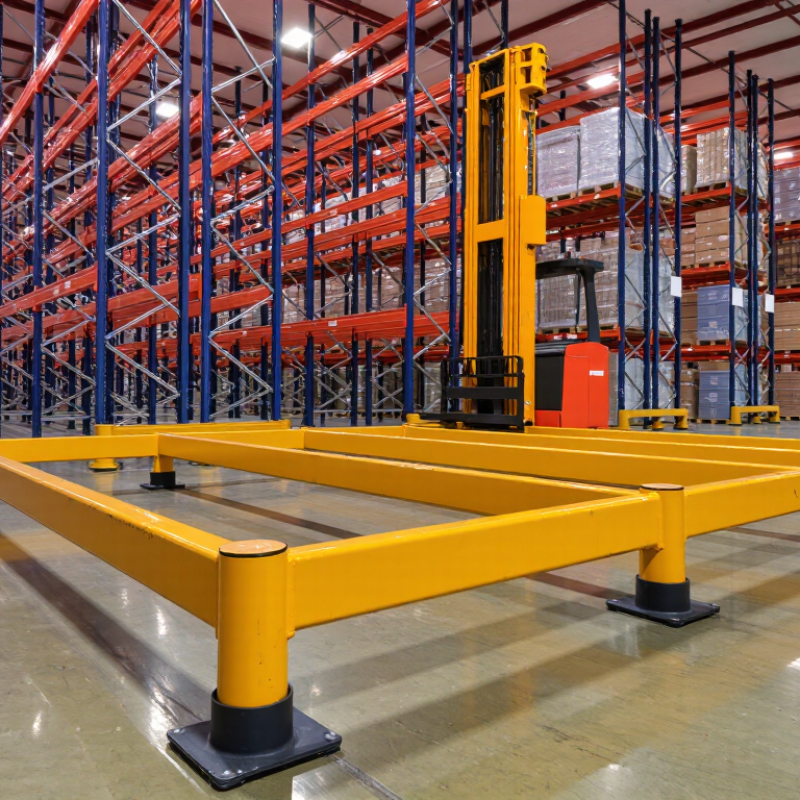
An impact rack is a protective steel barrier fitted around vulnerable warehouse racking, often at aisle ends or exposed uprights. It is anchored to the floor and positioned to take a bump before a forklift or pallet reaches the rack. Designs differ. Some protect a single upright; others shield an entire row end. That matters. Forklift forks, counterweights, or pallet corners can strike these points during tight turns. Even a modest collision may bend an upright or damage its connections.
The guard can reduce direct impact damage, but it cannot make a rack impact-proof. Not a guarantee. After a collision, check for shifted anchors, cracked concrete, bent steel, or visible rack deformation. Intact paint does not prove that the guard or rack is sound. Damaged components should be assessed by a qualified rack professional before the affected area returns to use. A guard can also create false confidence, which deserves attention. It may narrow the turning path, so measure aisle clearance and keep protective equipment clear of forklift routes. Regular inspections and careful driving remain essential.
An impact rack combines pallet-rack structure with protection against accidental vehicle contact. The uprights form the vertical frames, while horizontal beams support pallet loads between them. Together, these parts carry stored goods; they are not automatically impact-proof. That distinction matters. Protective components help reduce damage, but they do not make careless driving safe.
Upright guards fit around vulnerable frame legs, especially near aisle openings, where forklifts often turn. End-of-aisle barriers use sturdy posts and rails to shield exposed rack rows from wider vehicle strikes.
Floor anchors secure rack feet or barriers to the concrete, helping keep them in position; the correct fixing method depends on the floor and the equipment design. Small details matter. Guards should not block inspections or hide damage.
After a collision, check for bent steel, loose anchors, cracked concrete, or shifted beams, and keep the affected area clear until a qualified person assesses it. A guard may look intact while the rack behind it is damaged.
No layout removes every blind spot, so protection works best alongside clear aisles, visible load notices, and regular checks.
An impact rack is built to manage collisions at vulnerable points, such as loading bays or conveyor transfer zones. Its protective face meets a moving load first. Behind it, flexible steel members or energy-absorbing inserts deform slightly, spreading the hit across a wider frame instead of concentrating it on one upright. The goal is to reduce peak force, not make force disappear. That matters.
Some designs use replaceable polymer bumpers; others rely on shaped steel members that flex and return toward their original position. As the rack gives, its base plates and anchors pass remaining force into the floor. Installation matters. A loose anchor, damaged bumper, or poorly chosen clearance can send the load somewhere unexpected. Not magic.
OSHA estimates that powered industrial truck incidents cause about 34,900 serious injuries and 61,800 non-serious injuries annually in the United States. These figures are a reminder that impacts deserve practical controls, not just sturdier-looking equipment.
Rack Manufacturers Institute guidance also emphasizes assessing rack damage after an impact; a protected rack still needs inspection. A small bend can be easy to miss. Honestly, visual checks alone may not reveal hidden damage, so follow the rack manufacturer’s inspection criteria and record any strike.
Impact racks are best placed where forklifts repeatedly pass close to storage frames. Common locations include aisle ends, cross-aisle intersections, and exposed corner uprights. These points see frequent turning, reversing, and load positioning. A few inches matter. A pallet corner can strike a frame when an operator adjusts a load in a tight aisle.
Loading docks and staging zones also deserve attention, especially where forklifts move between trailers and storage lanes. The U.S. Bureau of Labor Statistics reported a 2022 recordable injury rate of 4.8 cases per 100 full-time workers in warehousing and storage, compared with 2.7 across private industry. This measures injuries, not rack impacts, but it highlights the demands of warehouse work. Protection should match the actual traffic pattern, not just the floor plan.
Walk the route during a busy shift. Look for scraped paint, bent guards, and repeated turning marks near uprights. It is easy to miss a conflict when the warehouse is quiet. Keep protective equipment clear of travel paths, exits, and sprinkler systems, and have damaged rack components assessed before reuse. A guard can reduce direct contact, but it cannot correct poor aisle clearance or careless loading.
Choose an impact rack or guard by mapping where forklifts turn, reverse, and handle loads. Match its height and fixing method to the upright, floor, and likely contact point. Check the rack’s rated capacity and the impact-protection system’s test or design information; a guard is not permission to exceed load limits.
The Rack Manufacturers Institute’s ANSI MH16.1 standard addresses steel storage rack design, while site-specific layout and loading still matter. Small details matter. A guard that blocks an aisle or hides a damaged upright can create new risks.
Maintenance needs a routine, not guesswork.
Inspect anchors, bolts, welds, and the floor for movement, cracks, or fresh scrape marks. After a collision, restrict access and have a competent person assess the rack before it returns to service.
The U.S. Bureau of Labor Statistics reported 4.8 total recordable injury and illness cases per 100 full-time-equivalent workers in transportation and warehousing in 2022. That figure covers the wider industry, not rack impacts alone, but it reinforces the value of practical hazard checks.
Keep inspection records, note recurring strike locations, and adjust traffic routes or guard placement when patterns appear.
No guard makes careless driving safe. And inspections can miss things. Recheck after repairs and whenever loads or equipment change.
It is warehouse racking protected by steel barriers around vulnerable areas. The barrier takes a bump first.
Uprights near aisle openings and exposed row ends are common targets. Forks and pallet corners can strike them.
No. It can reduce direct impact damage, but it cannot make a rack impact-proof. Not a guarantee.
Look for bent steel, loose anchors, cracked concrete, shifted beams, or visible rack deformation. Paint alone proves little.
Yes. Damage may sit behind an intact-looking guard. It is easy to miss.
Keep it clear until a qualified rack professional assesses the damage. Do not rely on a quick visual glance.
They secure rack feet or barriers to the concrete. The right fixing method depends on the floor and equipment design.
Yes. A barrier may narrow the turning path, especially near an aisle end. Measure clearance and keep routes clear.
Use clear aisles, visible load notices, careful driving, and regular inspections. No layout removes every blind spot.
Impact Racks are protective structures designed to shield equipment, storage systems, and nearby work areas from accidental collisions. Commonly installed in warehouses, loading zones, production facilities, and other spaces where vehicles or moving equipment operate, they help reduce damage to valuable assets and improve workplace safety. Their effectiveness depends on choosing a rack suited to the expected impact risks and the layout of the area.
An impact rack typically includes a sturdy frame, protective rails or barriers, connection points, and anchors that secure it to the floor. When struck, these components work together to absorb some of the force, distribute it across the structure, and redirect it away from the objects being protected. Regular inspections can reveal loose fasteners, deformation, or other damage that may weaken performance. Selecting the right rack involves considering the type of traffic, likely collision points, available space, and installation conditions, then maintaining it through routine checks and timely repairs.

Aliracking