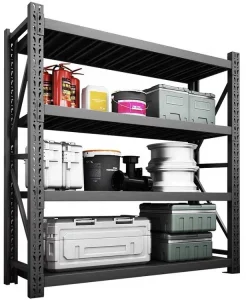
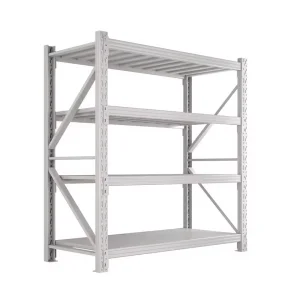
Explore our flagship heavy-duty industrial storage racks, boltless rivet shelving, and reinforced wire mesh solutions engineered for high load-bearing capacity and unmatched space efficiency.
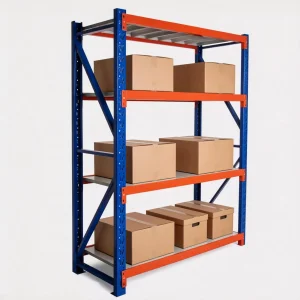
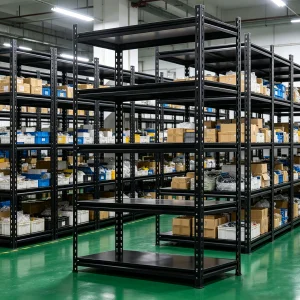
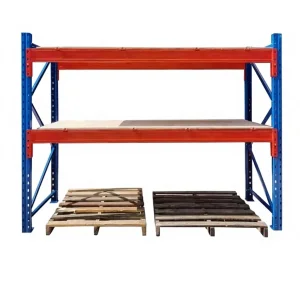
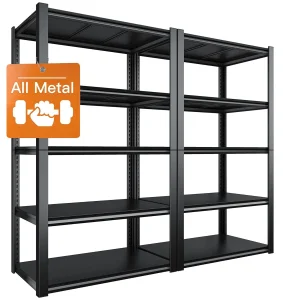
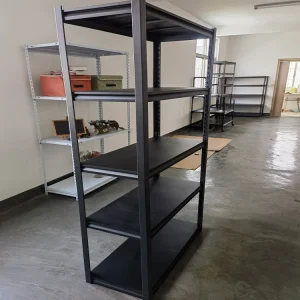
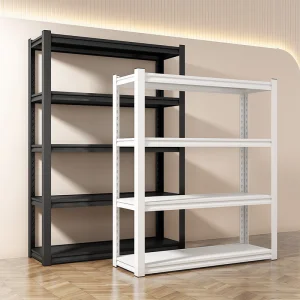
Shenzhen Aliracking Industry Co., Ltd. is a premier global manufacturer specializing in high-performance warehouse racking and industrial storage structural systems. Established in 2015, our operations have scaled rapidly, driven by advanced engineering and customer-centric customization. We operate a state-of-the-art production facility spanning 35,000 m², utilizing robotic manufacturing processes to ensure absolute precision.
With over 12 years of industry experience and 8 years of direct export expertise, we deliver robust structural racking systems designed to withstand demanding environments. Our global footprints span North America, Europe, Southeast Asia, and the Middle East, generating an annual export revenue of $18 million. We cater to 3PL logistics, large e-commerce hubs, and industrial manufacturers.
Our ISO 9001-certified production facility operates under strict QA protocols. We integrate third-party on-site inspections, non-destructive testing (NDT), and specialized load-bearing simulation tests to guarantee seismic resilience and compliance with standard safety regulations.
Unlocking the full potential of warehouse footprints through engineered structural racking optimization in the era of high land costs and rapid 3PL growth.
Worldwide, logistics hubs face historical highs in cost-per-square-meter of warehouse space. Simply expanding horizontally is no longer financially viable. High-density vertical racking systems resolve this bottleneck by expanding storage vertically, effectively scaling storage volumes upwards rather than outwards. By using vertical structures with optimized beam adjustments, businesses can increase storage density by up to 250% compared to traditional floor-stacking techniques.
Additionally, modern structural racking design incorporates high-strength Q235B and Q355B hot-rolled steel profiles, enabling multi-level platforms and mezzanine supports to carry immense loads safely. This maximizes vertical cube space without compromising structure safety.
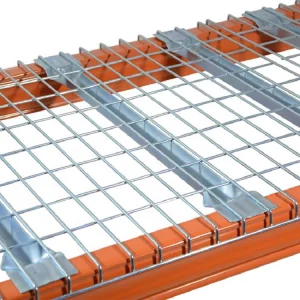
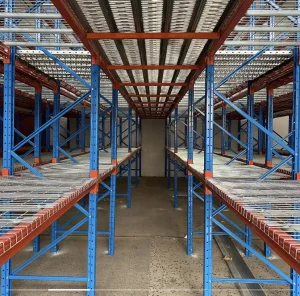
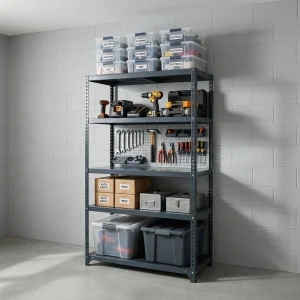
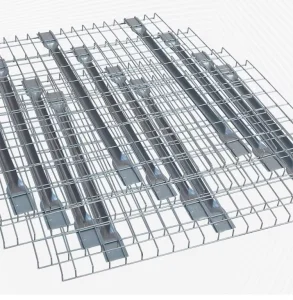
E-commerce fulfillment hinges on fast cycles, minimal latency, and accurate SKU selection. Incorporating specialized vertical structures like boltless rivet shelving with wire mesh panels improves pick-path accessibility and ensures safety compliance. High-capacity wire mesh decking optimizes warehouse airflow and ensures sprinkler penetration in fire emergencies, a crucial regulatory standard in modern industrial configurations.
Our solutions adapt to complex automated storage and retrieval systems (AS/RS), establishing the physical groundwork for automated logistics integration.
Deep-dive analysis of structural design, steel grades, corrosion protection, and automated manufacturing pipelines.
We source cold-rolled steel (grades Q235B and Q355B) characterized by optimized yield strength and ductility. Structural elements undergo Finite Element Analysis (FEA) to simulate load stress distribution, ensuring safety factors up to 1.5 under full nominal loads.
Electrostatic powder coatings provide superior protection. Racks undergo a 5-step pretreatment (degreasing, rinsing, pickling, phosphating, pure water rinse) prior to powder curing at 200°C. Galvanized wire deckings offer maximum anti-rust protection for high-humidity environments.
Our facility incorporates automatic steel roll-forming and robotic welding systems (OTC/Fanuc) to ensure consistent structural welds. Precision automated tooling guarantees consistent dimensional tolerance, minimizing structural variances during assembly.
A transparent look inside Aliracking's 35,000 m² automated production line, detailing each process from raw steel inspection to custom packaging.
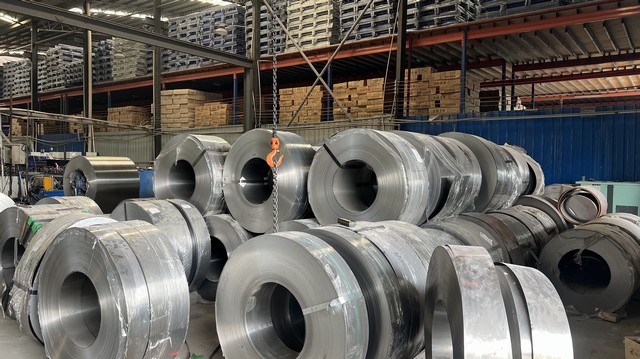
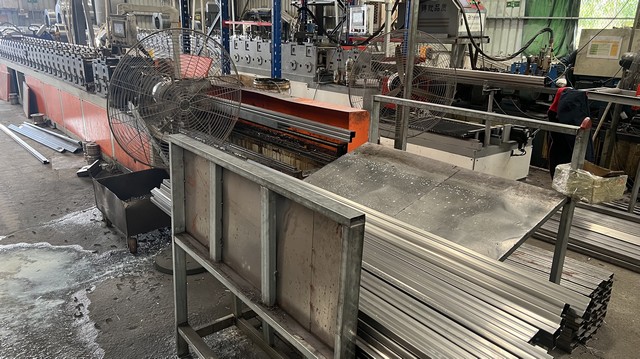
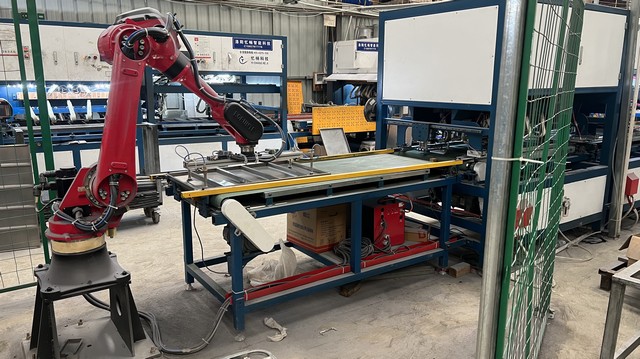
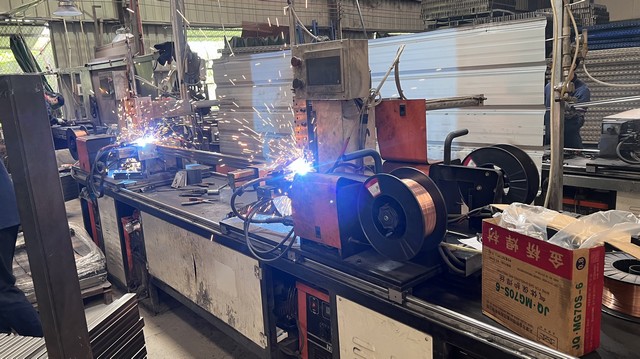
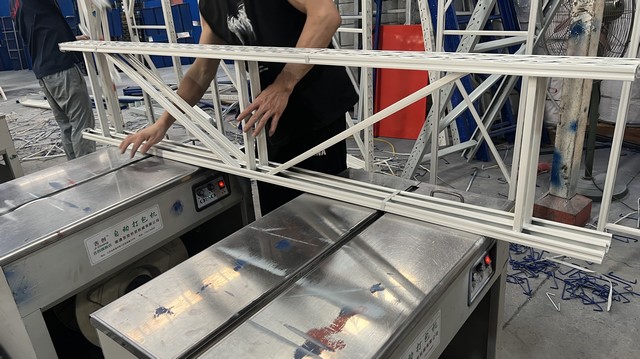
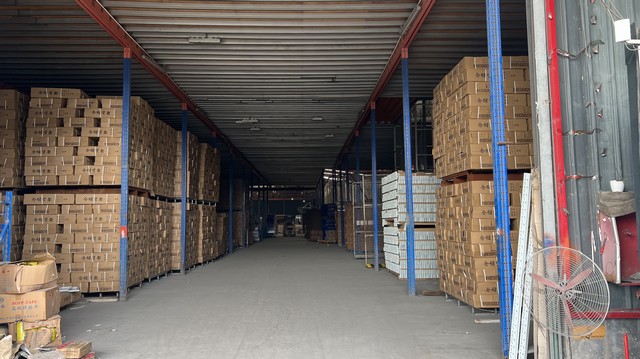
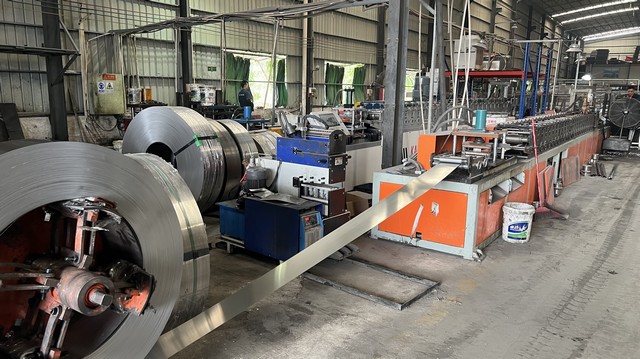
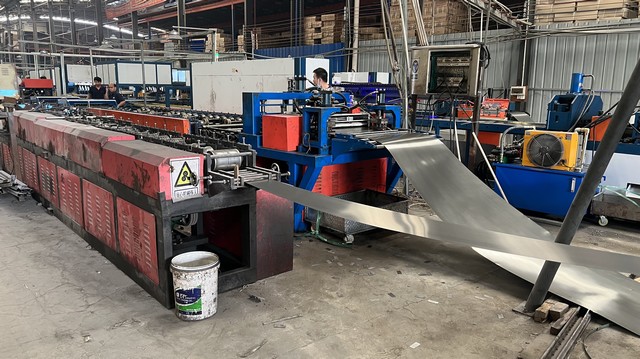
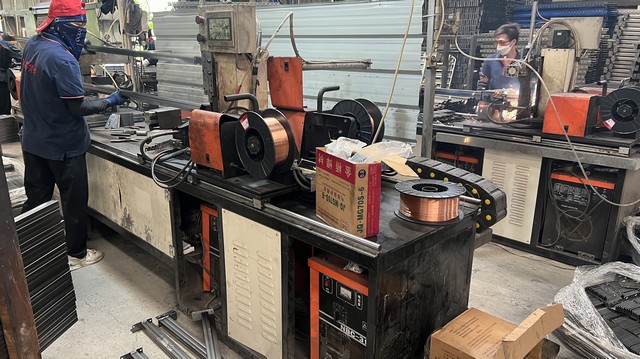
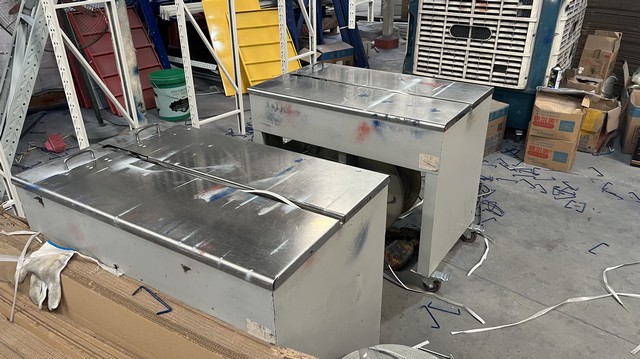
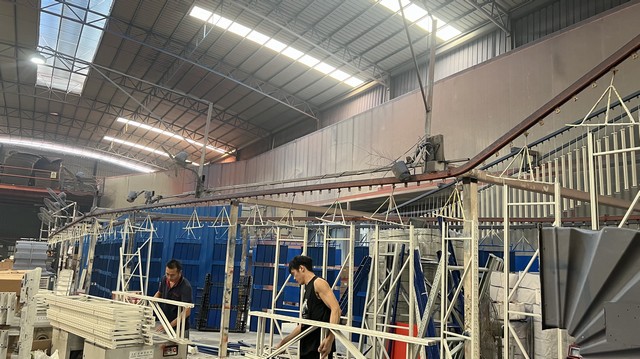
Manufacturing in Shenzhen, the primary technology and logistics hub of Southern China, grants Shenzhen Aliracking Co., Ltd. distinct geographical and economic advantages:
Every vertical storage system we export is calculated to comply with local codes. We configure structural upright profiles to satisfy RMI (Rack Manufacturers Institute) guidelines in North America, EN 15512 codes in Europe, and AS 4084 regulations in Australia, guaranteeing safety compliance in seismic zones.
Bridging the gap between domestic factory output and international installation requirements through specialized support teams.
We work with international installers, adapting racking sizes, height modifications, upright colors, and deck patterns to suit specific warehouse layouts.
Our components are accompanied by certificate records (mill certificates, load limit testing records, compliance sheets) to facilitate local structural approvals and permit issuance.
We provide full AutoCAD floor plans, component detail views, and installation guides. For large-scale projects, remote video consultations or engineer dispatch can be arranged to guide local assembly teams.
Professional answers to common engineering questions concerning steel racking configurations, safety limits, and ordering processes.
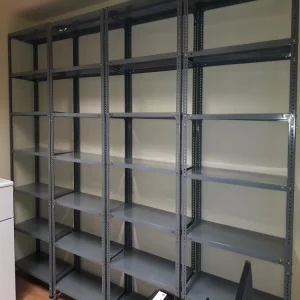
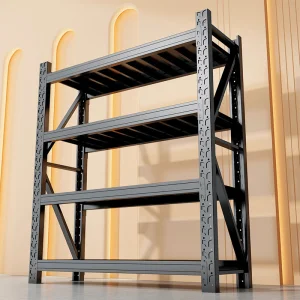
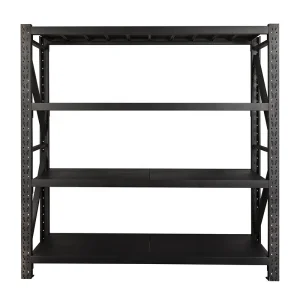
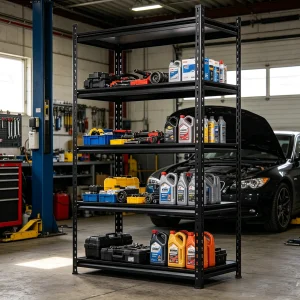
Browse our catalog of medium-duty shelves, multi-level decking, adjustable boltless systems, and warehouse steel configurations.
 Aliracking