Top China Cantilever Storage Manufacturers: Engineering Resilient Industrial Systems

A Comprehensive Engineering & Sourcing Guide to Heavy-Duty Heavy Cargo Solutions, Manufacturing Rigor, and High-Density Warehouse Optimization.

Manufacturer Authority

Industrial Warehousing Excellence Since 2015

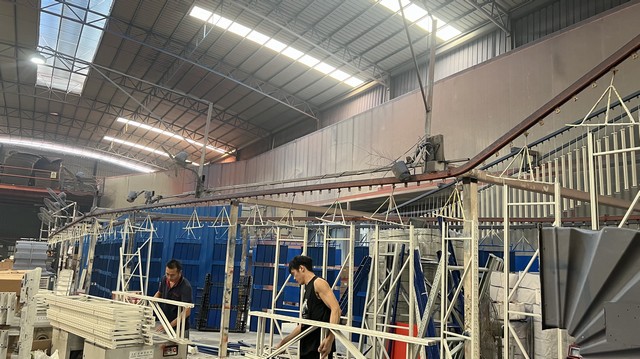
In the modern logistic and material handling landscape, structural integrity and engineering precision are non-negotiable. Shenzhen Aliracking Industry Co., Ltd. is a leading manufacturer specializing in high-performance warehouse racking and industrial storage solutions. Established in 2015, the company operates a state-of-the-art production facility covering an expansive area of 35,000 m². With over 12 years of industry experience and 8 years of direct export expertise, we deliver robust, high-density storage systems to businesses worldwide, generating an annual export revenue of $18 million.

Heavy duty logistics and spatial constraints demand sophisticated engineering. Cantilever storage systems are the backbone of storing long, unwieldy, or bulky materials—such as lumber, structural steel piping, gypsum board, and industrial sheets. Standard pallet racks fall short when long items must be stored without the interruption of vertical upright structural columns. Choosing a partner who designs to precise international codes determines the safety profile and operational throughput of your warehouse.

35k+

Facility Area (m²)

12+

Years Experience

18M

Export Vol. ($ USD)

850+

Supply Partners

China Factory 4.0

Supply Chain Resiliency & Manufacturing Efficiency

Quality and safety are at the core of our manufacturing philosophy. We implement rigorous ISO 9001 certified Quality Assurance (QA) protocols alongside comprehensive Third-Party On-Site Inspections and Non-Destructive Testing (NDT) for load-bearing components. Supported by a dedicated team of 28 QA/QC specialists and 15 R&D engineers, we released 45 new product designs last year alone. Our strong engineering capability allows us to offer extensive customization options, including tailored structural dimensions, customized load capacities, specialized powder coatings, and OEM/ODM services to meet complex logistics demands.

Backed by a solid Foreign Trade Corporation background and a strong network of over 850 supply chain partners, Shenzhen Aliracking serves a global customer base across North America, Europe, Southeast Asia, and the Middle East. Our primary clients include 3PL Logistics Providers, E-commerce Fulfillment Centers, Large Distribution Warehouses, and Industrial Manufacturers.
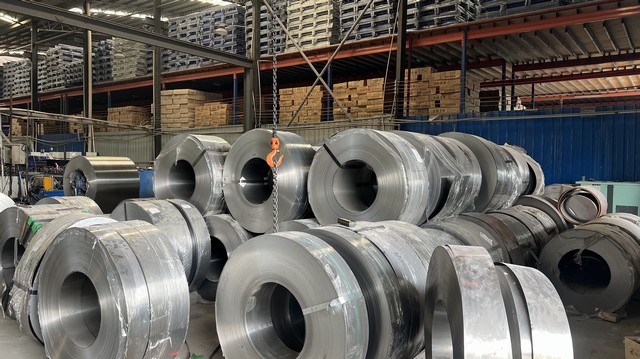
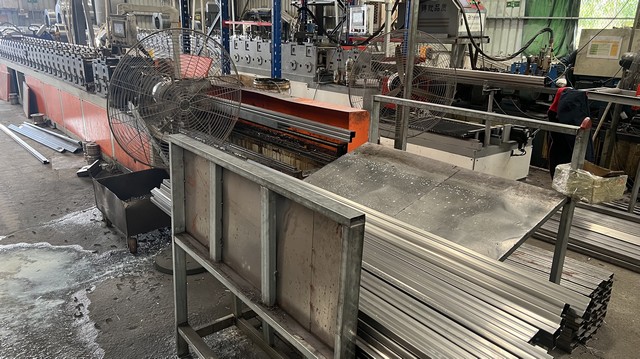
Raw Material Preparation
Rolling Process
Rolling
Precision Rolling
Rolling
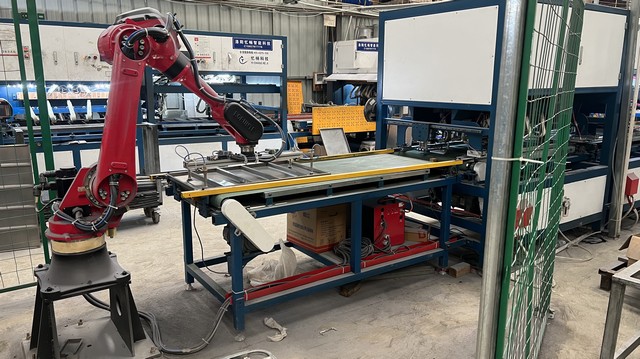
Robotized Welding
Welding
Secure Packing
Packing
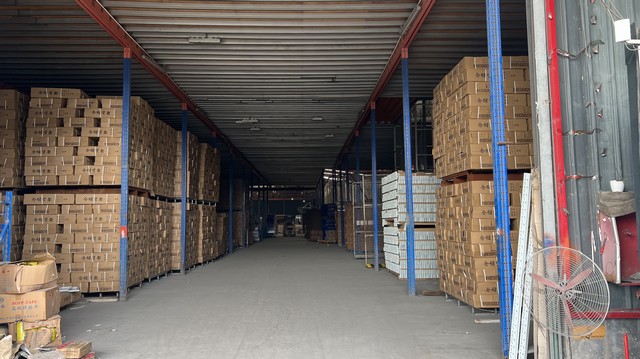
Standardized Warehouse
Warehouse
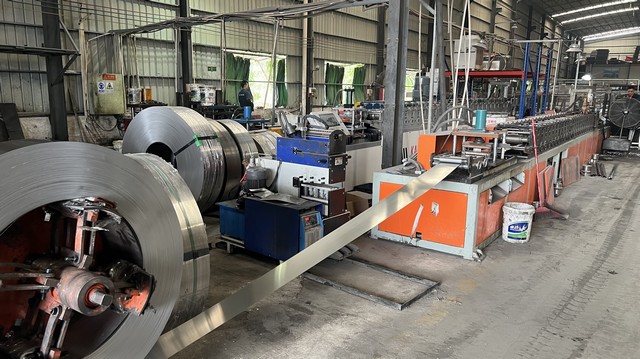
Square Tube Rolling Line
Square Tube Rolling Production Line
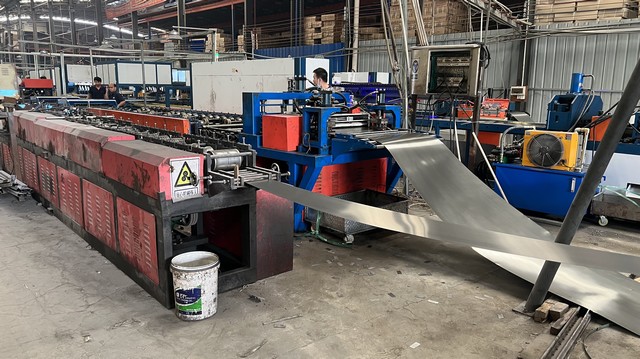
Automatic Rolling Line
Fully Automatic Rolling Production Line
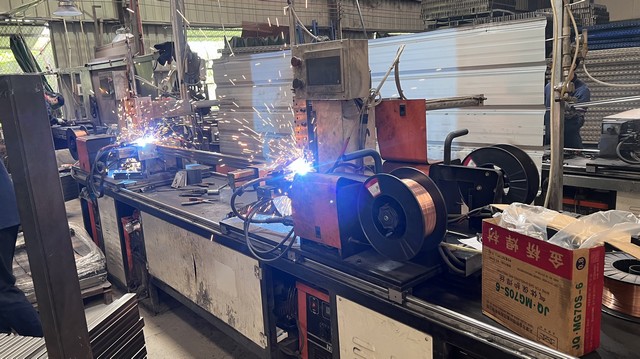
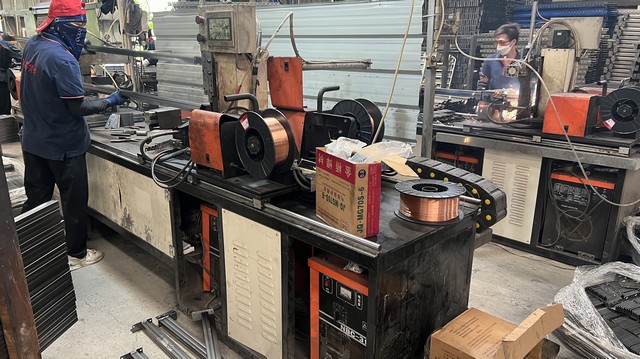
Precision Welding Line
Welding Production Line
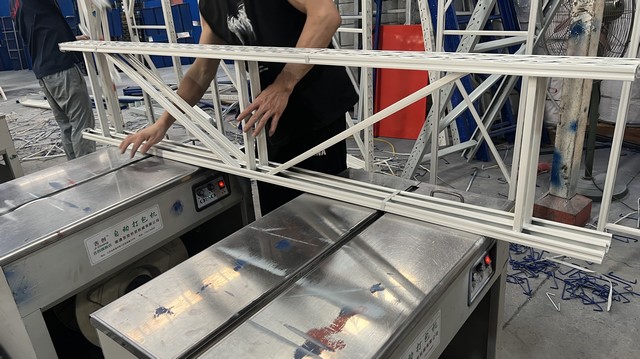
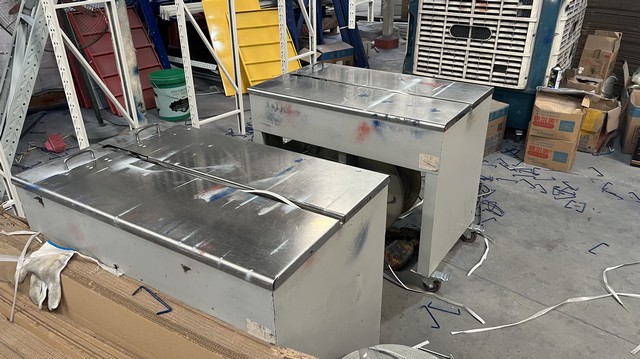
Automatic Packing Machine
Packing Machine
Powder Coating Line
Powder Coating Production Line
Technical Roadmap

The Engineering Evolution of Cantilever Systems

I-Beam Roll-Formed Optimization

Applying high-tensile hot-rolled structural steel to ensure maximum flexural resistance under non-uniform, point-loaded payloads. Structural engineering software calculates variable moments of inertia along the length of each upright column.

Adaptive Arms & Pivot Safety

Designed with a pivoting pin connector structure. When bumped by a forklift carriage during a vertical hoist, the arm shifts upward and defuses catastrophic impact energy, preventing permanent deformation of the structural upright.

Corrosion & Durability Profiles

Employing advanced hot-dip galvanization processes and electrostatically applied thermo-setting epoxy polyester powder coatings. These specialized barrier treatments withstand harsh chemical exposures and outdoor yard storage conditions.

Industrial storage technology is pivoting toward smart warehouses. Shenzhen Aliracking is actively prototyping sensor-embedded cantilever configurations. In these systems, real-time load cells measure deflection on individual arms, transmitting alerts to safety managers through IoT gateways before an over-capacity failure occurs. Structurally, our team is optimizing the strength-to-weight ratio by refining steel micro-alloy elements. Our next-generation systems support taller column heights and wider clear spans, helping warehouses maximize vertical envelope utilization safely.

Macro Industry Solutions

Application-Driven Storage Engineering

Different industrial sectors present distinct material handling challenges. A generalized approach can lead to systemic failures or costly over-engineering. We analyze vertical profiles and load configurations to design sector-specific racking:

1. The Timber & Lumber Industry

Lumber bundles are susceptible to sag when stored across irregular supports. Our engineered wood cantilever racks use wide base configurations and evenly spaced arms to distribute the load evenly. To facilitate side-loading with standard forklifts, we engineer custom arm pitches and end stops, avoiding fiber pinch points while preventing logs and timber packs from rolling off.

2. Structural Steel & Metal Pipes Sourcing

Steel piping and heavy bar stocks require systems with exceptional static load carrying capacity. Our heavy structural I-beam cantilever systems support up to 5,000 kg per arm level. By utilizing structural ASTM A36 or Q355B hot-rolled profiles, we construct components that resist long-term fatigue. Our designs feature welded pipe stops and socket columns to prevent heavy tubular components from rolling during retrieval cycles.

3. 3PL & Distribution Operations

Third-party logistics (3PL) providers require versatile racking solutions to accommodate changing client inventory. Our adjustable-arm cantilever systems feature a 50mm or 75mm punching pitch, allowing logistics operators to reposition arms vertically without tools. This adaptability simplifies switching between storing building wraps, automotive panels, or coiled materials, keeping warehouse occupancy and revenue optimal.

Global Sourcing Assurance

Localization Support, Compliance & Standards Assurance

Procuring industrial racking from China requires strict adherence to international structural codes. In the event of a storage accident, non-compliant racking can void liability insurance and lead to OSHA citations. Shenzhen Aliracking designs and tests all structural products to ensure compliance with world-class engineering standards:

  • RMI Standards (ANSI MH16.3): Regulating the specification, testing, and design parameters for steel cantilever racking in the North American market.
  • European FEM Code 10.2.09: Certifying that the structural calculations for cold-formed steel and structural components comply with safety factor guidelines.
  • AS4084-2012: Engineering steel storage racks to meet structural standards in Australia and the Asia-Pacific region.
  • ISO 9001:2015: Overseeing our manufacturing and management systems, ensuring raw material traceability and uniform weld penetration.

To reduce shipping costs, we optimize container loading configurations and design knock-down components that pack tightly. This structural modularity minimizes freight costs while maintaining strength. When products arrive on site, detailed CAD elevation prints, slab anchor requirements, and bolt-torque parameters guide your installation team, helping you complete projects on schedule.
FAQ Center

Technical Sourcing & Engineering FAQ

1. What steel grades does Shenzhen Aliracking use for heavy-duty systems?
We primarily utilize high-tensile carbon structural steels, specifically Q235B (equivalent to ASTM A36) and Q355B (equivalent to ASTM A572 Grade 50). Q235B is selected for roll-formed applications and moderate loads, while Q355B hot-rolled structural steel is used for columns and arms in heavy-duty systems, ensuring long-term structural integrity under maximum stress.
2. How do you calculate cantilever load capacities and avoid deformation?
Load capacities are determined using finite element analysis (FEA) based on the target payload. The system design ensures the maximum bending moment (M = P × L, where P is load and L is arm length) remains well within the steel's allowable bending stress limits, applying a safety factor of 1.5 to 1.9. This protects columns against torsional buckling and keeps arm deflection below L/180.
3. What is the advantage of using structural I-beams over roll-formed options?
Structural steel I-beams provide higher load capacity and resist impact damage better than roll-formed profiles. They are ideal for high-capacity applications in heavy manufacturing or scrap facilities, as they tolerate forklift impacts without bending. Roll-formed sections are lighter and more cost-effective for medium-duty warehousing.
4. How do you protect storage systems against corrosion in outdoor settings?
For outdoor installations, we recommend Hot-Dip Galvanizing (HDG) conforming to ASTM A123. This process deposits a protective zinc layer over 70 microns thick. For indoor environments, we apply a multi-stage powder coating process that includes acid pickling, phosphating, and electrostatically applied epoxy-polyester powder, followed by heat curing to resist scratches and rust.
5. Why do your cantilever systems feature a pivoting arm design?
Our pivoting arms are secured to columns using high-strength steel pins instead of rigid bolts. If a forklift operator accidentally strikes the arm from below, it pivots upward to absorb the impact energy. This prevents structural damage to the column-arm connection, reducing maintenance costs and protecting workers.
6. What quality assurance and testing protocols do you perform on-site?
Our quality assurance system relies on a team of 28 QA/QC specialists. We perform ultrasonic non-destructive testing (NDT) to inspect structural welds, verifying full weld penetration. We also conduct regular steel tensile strength testing, coating thickness verification using magnetic gauges, and cross-hatch adhesion testing on every production lot.
7. Do your racking designs meet RMI and FEM safety regulations?
Yes. All structural calculations and configurations comply with North American RMI standards (ANSI MH16.3) and European FEM Code 10.2.09. We supply complete calculation sheets and PE stamps (professional engineer approvals) for local building permit compliance upon request.
8. How do you configure systems for seismic hazard zones?
For seismic zones, we adjust structural base sizes, select thicker steel profiles, and design heavier base plate connections with expansion concrete anchors. Our engineering team calculates local ground accelerations according to the International Building Code (IBC) to ensure structural stability during seismic events.
9. What customization options do you offer for OEM/ODM orders?
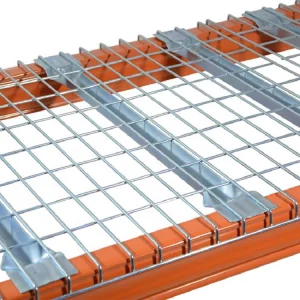
Supported by 15 R&D engineers, we customize column heights up to 12 meters, arm lengths, load capacities, colors, and accessories like guide rails, wire mesh decks, and canopy structures. This allows us to tailor systems to match specific inventory profiles and warehousing layouts.
10. How long is the standard production cycle and how are shipments protected?
Standard production takes 20 to 30 days from drawing sign-off to container loading. We wrap components in protective bubble wraps, secure them with heavy-duty steel bands, and pack them on custom wooden pallets. This packaging prevents shifting and surface abrasion during ocean transit, ensuring components arrive in perfect condition.