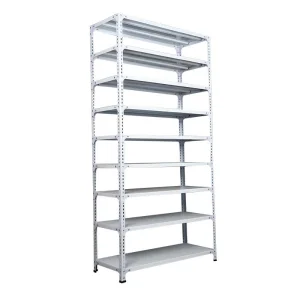
Metro Manila stands as the economic heartbeat of the Philippines, acting as the primary logistical artery for Luzon and the archipelago at large. With the exponential rise of domestic e-commerce platforms, cold-chain modernization, and expanding industrial economic zones (such as Cavite, Laguna, Batangas, Rizal, and Quezon—collectively known as CALABARZON), the demand for high-efficiency material handling infrastructure has scaled dramatically. Modern warehouses and fulfillment facilities in Manila face a dual challenge: land scarcity leading to high rental rates, and congestion in port access routes requiring highly optimized interior material workflows.
Integrating automated and gravity-driven conveyor systems with high-density steel warehouse racking has transitioned from an operational luxury to a baseline necessity. Industrial spaces in Valenzuela, Parañaque, Pasig, and nearby Cavite economic zones require robust, seismic-rated configurations designed to support uninterrupted cargo flow. Standardizing your layout with state-of-the-art material flow structures mitigates bottlenecking, reduces manual labor vulnerability, and directly targets a lower cost per order fulfilled.
Furthermore, the climatic reality of Manila—characterized by prolonged wet seasons, high ambient humidity, and saline coastal environments near Manila Bay—presents unique material degradation threats to industrial equipment. Racks, roller frames, and conveyor brackets must be manufactured with rigorous corrosion protection, such as thick electrostatic powder coatings or hot-dip galvanization. As direct partners to leading global distributors, our engineering focus ensures structural designs meet or exceed both local building regulations and international EN, FEM, and ANSI standards.
Optimizing intralogistics performance requires a strategic marriage between structural storage (racks) and dynamic transport (conveyors). By establishing a modular structural blueprint, Manila distribution centers can adapt conveyor path modifications without rendering current storage setups obsolete. Below, we examine the typical structural configurations deployed across industrial warehouses in Manila.
| Conveyor & Storage System Type | Primary Application (Manila Markets) | Standard Load Ratings | Seismic & Corrosion Specifications |
|---|---|---|---|
| Powered Roller Conveyor Systems | E-commerce sortation, heavy parcel movement, carton transport in Parañaque & Taguig centers. | 50kg to 150kg per carton | IP54 rated drive motors, electrostatic powder-coated frames, low-noise running gear. |
| Gravity Roller & Skatewheel Paths | Dock loading bays, manual assembly buffers, outbound shipping zones at Manila Port Area. | 20kg to 100kg/meter | Zinc-plated steel tubes, precision ball bearings, structural C-channel steel frame. |
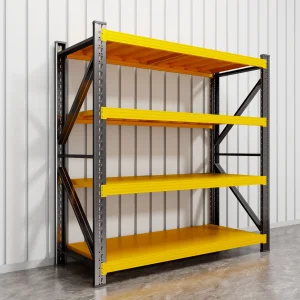
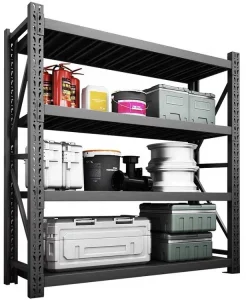
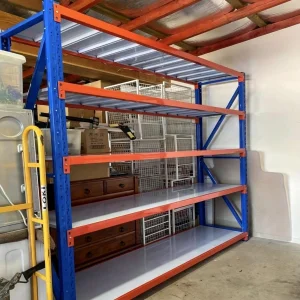
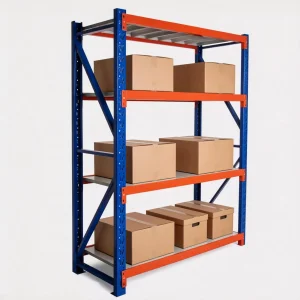
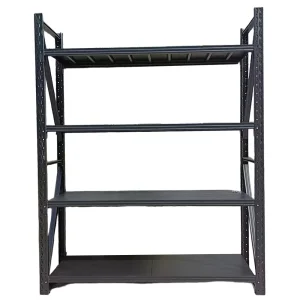
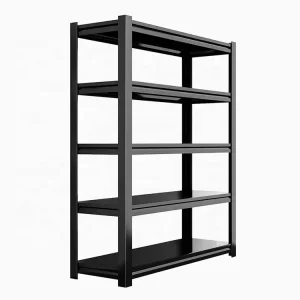
| Heavy Duty Pallet Racking Systems | High-density palletized storage, bulk manufacturing raw materials, warehouse depots. | 1000kg to 3000kg per level | Seismic design Zone 4 (PH local compliance), Q235B cold-rolled steel, adjustable uprights. |
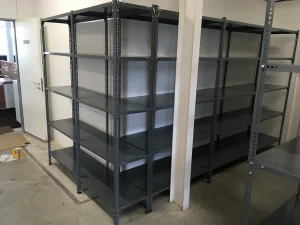
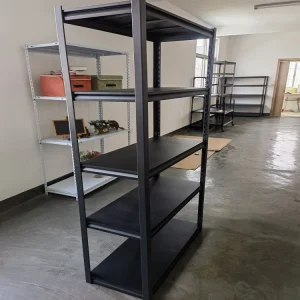
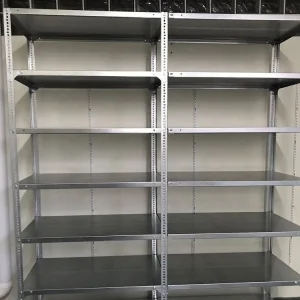
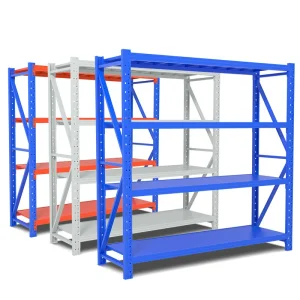
| Slotted Angle & Medium Shelving | Spare parts storage, hardware retail, light electronics assembly lines in PEZA zones. | 100kg to 300kg per level | Corrosion protection powder coat, toolless boltless frame assembly, moisture-proof decking. |
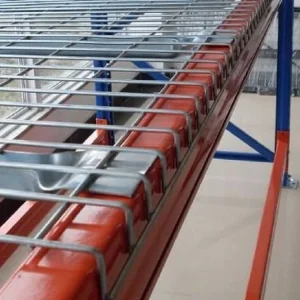
Incorporating these systems requires precise vertical layout calculation. Vertical lifters and spiral gravity chutes work alongside multi-level galvanized wire mesh decking and mezzanines to ensure floor footprints are utilized efficiently. When integrating high-density racking with dynamic transport, calculating structural deflection margins is paramount to avoid operational collisions between automated conveyor components and loaded pallets.
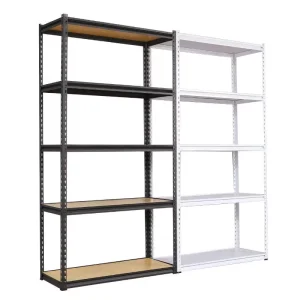
With major players operating massive fulfillment facilities in proximity to Ninoy Aquino International Airport (NAIA) and Port of Manila, speed of sorting is the critical metric. Here, multi-lane powered roller conveyors are paired with light-duty boltless racking and medium-duty shelving to handle tens of thousands of dynamic SKU bins. Fast, low-friction return lines and automated scanning gates keep local pickers moving efficiently, avoiding order logjams.
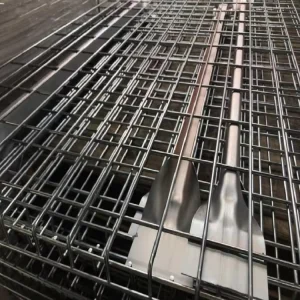
From seafood distribution to frozen poultry processing plants in Pasig and Valenzuela, cold-room warehousing requires robust materials that can handle freezing temperatures down to -25°C. Hot-dip galvanized wire mesh decking, structural pallet racks, and stainless-steel conveyor rollers prevent rust build-up caused by persistent condensation during cross-dock operations.
Manufacturing export hubs in Laguna Technopark and Cavite Special Economic Zone demand high precision. ESD-protected (electrostatic discharge) modular belt conveyors carry PCB assemblies and micro-components between workstation cleanrooms. These are framed with slotted angle configurations for raw-material preparation, maintaining precise line feeds with minimal downtime.
High-throughput FMCG distribution centers in Calamba require heavy-duty carton-flow racking combined with gravity discharge conveyors. Product pallets are stored on multi-level heavy-duty racks, while fast-moving picks flow forward on gravity rollers directly to the picking aisle, boosting inventory turn rates and minimizing forklift travel paths.
As a premier industrial storage solution manufacturer, Shenzhen Aliracking Industry Co., Ltd. leverages a highly optimized supply chain to deliver high-quality structures to the global market. Established in 2015 with over 12 years of industry experience and 8 years of direct export expertise, we run a modern 35,000 m² production facility. We sustain an annual export revenue of $18 million, managing logistics and distribution to global destinations, including the Philippines, North America, Europe, and the Middle East.
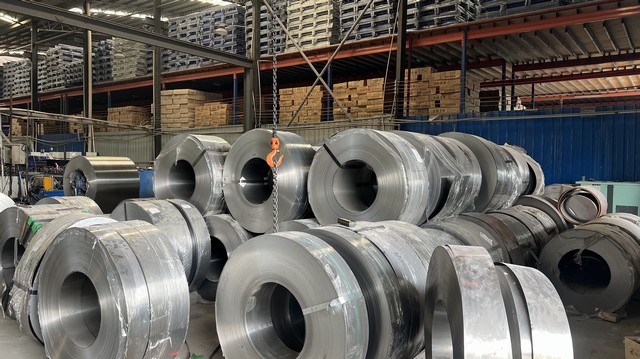
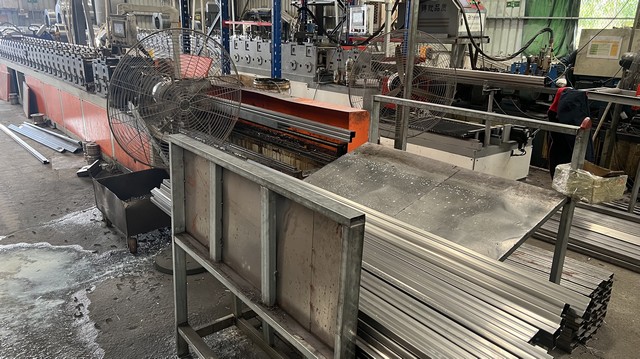
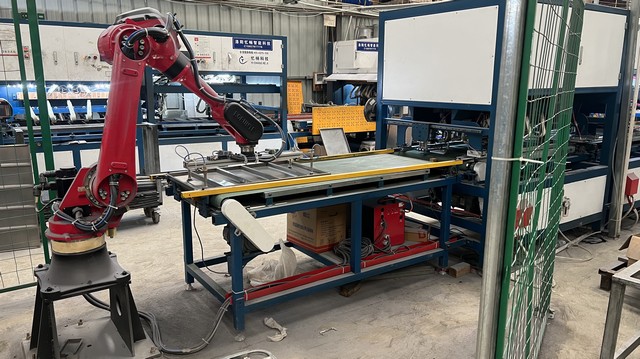
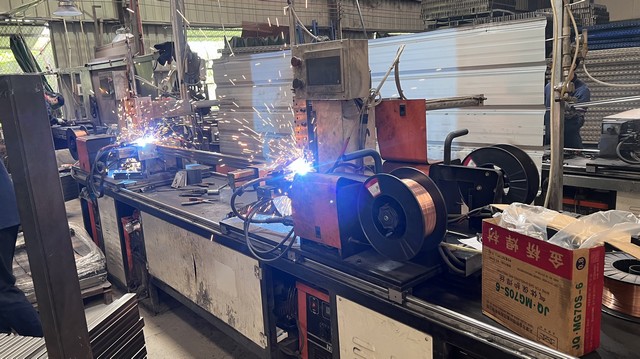
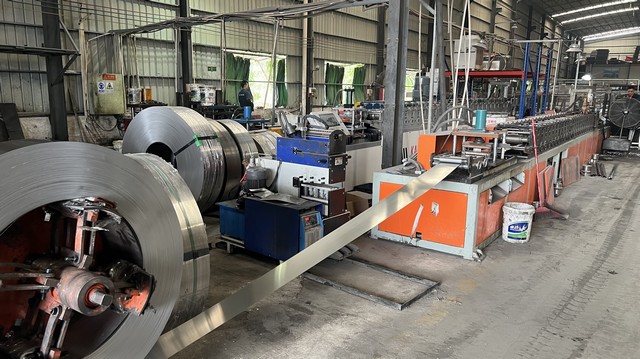
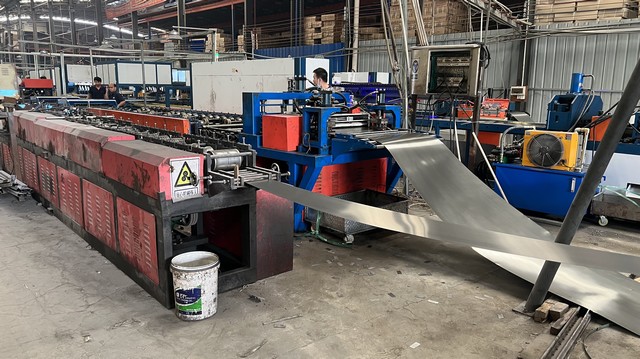
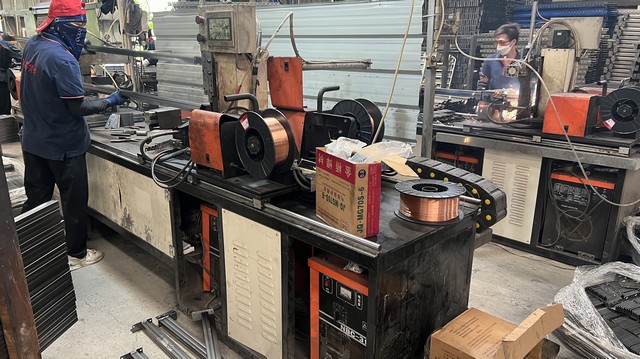
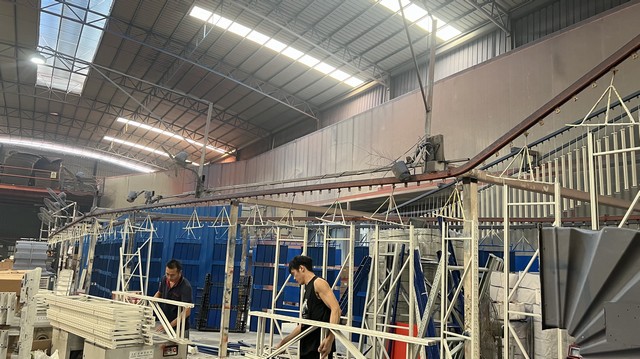
Our engineering advantage lies in raw material control and advanced machinery. By utilizing automated roll-forming lines, state-of-the-art robotic welding, and a continuous electrostatic powder coating line, we produce dimensional tolerances that meet precise international benchmarks. For the Manila market, our direct ocean shipping routes from Shenzhen Port to Manila North/South Harbor guarantee cost-efficient freight and reliable delivery lead times, circumventing third-party markups.
Quality assurance is core to our corporate model. We maintain a team of 28 QA/QC specialists and 15 R&D engineers, who developed 45 new product designs last year alone. Our processes are ISO 9001 certified, and we mandate third-party on-site inspection protocols alongside Non-Destructive Testing (NDT) for critical load elements. This structural rigidity is essential for Philippine installations, where seismic zoning demands proven structural compliance.
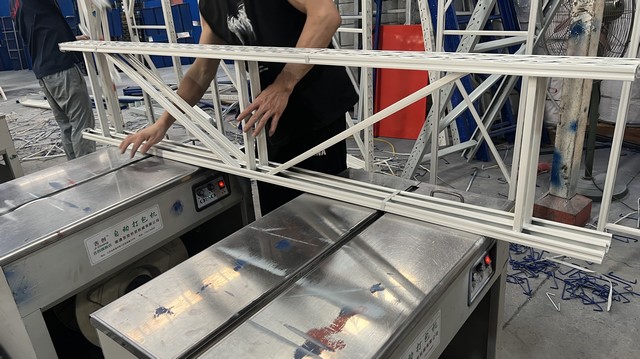
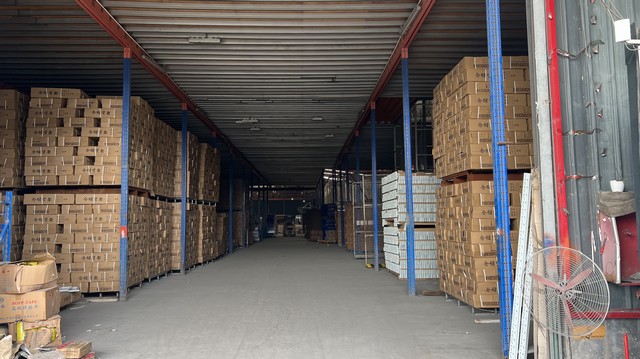
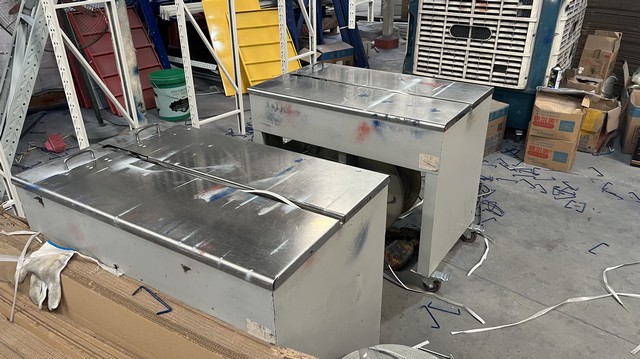
An inside look at our advanced manufacturing lines, roll-forming setups, automated welding stations, and powder coating systems that assure long-lasting industrial quality.
The intralogistics landscape in the Philippines is moving rapidly toward automation. Traditional racking configurations are increasingly modified to accommodate automated storage and retrieval systems (AS/RS), autonomous mobile robots (AMRs), and smart conveyor sorting paths. By adopting modular designs, businesses can scale systems in phases, avoiding complete layout overhauls when transaction volumes grow.
On the conveyor side, the shift from conventional AC motor drives to 24V DC Brushless Roller systems (MDR - Motorized Driven Roller) is gaining traction. MDR systems run dynamically—only operating when a parcel is detected—which saves significant energy costs. This aligns with localized initiatives in the Philippines to implement sustainable, energy-efficient operational structures.
Additionally, IoT sensor integration allows real-time diagnostics. Predictive maintenance systems can flag motor wear or structural deflection before an operational breakdown occurs. Modern systems utilize cloud-connected PLC frameworks, providing operators with performance analytics directly through standard warehouse control systems (WCS).
Shenzhen Aliracking leads this evolution by providing structural components that align with automated integrations. Our structural rack tolerances are engineered to accommodate precision conveyor configurations, sensor mounting structures, and high-frequency shuttle runs.
Implementing major warehousing developments in the Philippines requires strict adherence to local building codes, fire safety clearances, and mechanical installation guidelines. Structures located within seismic-active coastal regions like Metro Manila must comply with the National Structural Code of the Philippines (NSCP). Underestimating structural load values or installing non-compliant frames risks structural failure and code violations.
To address this, our engineers collaborate with Philippine design partners to verify structural math sheets prior to shipping. We supply comprehensive drawings and structural verification paperwork for local engineering sign-offs, helping expedite necessary business and municipal permits.
Furthermore, we offer step-by-step documentation, detailed mechanical blueprints, and remote video consultation to assist local installation contractors. From adjusting alignment tolerances to mounting motor drives, we provide complete technical transparency to ensure your systems are implemented correctly and perform as designed.
Whether your facility is based in a PEZA industrial zone in Laguna, a logistics hub in Valenzuela, or a shipping terminal at the Port of Manila, our logistics network handles export documentation, ocean transit bookings, and port coordination to simplify your project timeline.
 Aliracking